Play 2 Win Complaints and Reputation: Withdrawal Issues and Review Signals
 Available in US
Play 2 Win has several negative reputation signals, but they come from different third-party systems and should not be collapsed into one simple complaint count. AskGamblers currently shows 40 of 47 Play2Win complaints as resolved in its own complaints database. Casino Guru currently gives Play2win a Safety Index of 1.9/10, labelled “Very low”. Wizard of Odds blacklists the casino and links its decision to player-unfriendly terms and reports involving delayed payouts and confiscated winnings.
These are publisher-specific records, not findings by an Australian regulator and not a complete census of every player experience. The most useful way to read them is to compare recurring themes, dates, case outcomes and the operator’s Terms. For Australian readers, the strongest practical signal is that withdrawal-related disputes appear repeatedly across complaint and review sources, so the cashout rules deserve careful reading before any deposit.
Table of Contents
- Three reputation sources, three different methods
- What AskGamblers currently shows
- How to read Casino Guru complaint figures
- Wizard of Odds blacklist: what it actually says
- The recurring theme is withdrawal friction, not one single allegation
- How complaint evidence should change a decision
- What “resolved” does and does not mean
- Reputation is different from licensing
- Methodology for reading complaint databases
- Sources checked
- Frequently asked questions
- Bottom line
- Is Play 2 Win Casino Safe? Terms, Complaints and Risk Signals
Three reputation sources, three different methods
A complaint database, an editorial Safety Index and a blacklist are not interchangeable. AskGamblers tracks cases submitted through its complaint service and records their status. Casino Guru calculates its own Safety Index using a broader review methodology that includes terms, complaints and other risk factors. Wizard of Odds publishes a blacklist judgement based on its review of the operator and its terms.
| Source | Current signal | How to interpret it |
|---|---|---|
| AskGamblers | 40 of 47 complaints shown as resolved | A platform-specific case record. “Resolved” describes AskGamblers’ case status, not a guarantee that every complainant received the outcome they wanted. |
| Casino Guru | Safety Index 1.9/10, “Very low” | An editorial risk score produced under Casino Guru’s own methodology. |
| Wizard of Odds | Blacklisted | An editorial blacklist decision tied to its assessment of the terms and payout reports. |
The cross-platform pattern matters more than treating any one number as universal. All three sources point readers toward caution, but they use different datasets and editorial rules, so each rating and status should be read as the assessment of the publisher that produced it.
What AskGamblers currently shows
The current AskGamblers Play2Win record shows 47 complaints in total and 40 marked resolved. Its complaint pages also contain delayed-payment and withdrawal disputes. Some cases are old, and the database reflects only complaints submitted through that service, so the figures should be read as a historical platform record rather than a current failure rate for all Play 2 Win customers.
Resolution status also needs context. A resolved case can mean that payment was eventually made, that the platform accepted evidence supplied by the casino, or that the dispute reached another conclusion under AskGamblers’ process. It does not mean that the underlying experience was fast or friction-free. Several visible cases concern waiting for withdrawals, document checks or difficulty getting answers while a payment was pending.
The practical value of the database is thematic. It shows the types of issues that generated formal complaints and how the complaint service classified the outcomes. Those records do not establish a fixed percentage of all players who experience payout problems.
How to read Casino Guru complaint figures
Casino Guru’s current review provides a Safety Index of 1.9/10 and labels it “Very low”. Its complaint presentation, however, does not support one definitive cross-site complaint count. Use the visible Safety Index as an attributed rating and assess complaint records by their dates and case statuses.
Complaint totals depend on what a publisher counts, whether historical cases are retained, whether duplicate or rejected cases are included, and when the database was last recalculated. A precise-looking total can create false certainty when counting methods differ between platforms.
For that reason, the useful Casino Guru signal here is its current Safety Index and the review’s explanation that terms, complaints and other factors contribute to its assessment. The wider Play 2 Win trust review combines that signal with licensing and Terms evidence rather than treating the score as a standalone verdict.
Wizard of Odds blacklist: what it actually says
Wizard of Odds currently identifies Play2Win as blacklisted. Its review says the blacklist is based on predatory or player-unfriendly terms and multiple reports involving delayed payouts and confiscated winnings. Those statements are Wizard of Odds’ editorial conclusions, not findings of an Australian court or regulator.
The useful part for a reader is the connection between reputation and contract terms. The review specifically points to a rule that can limit potential cashouts for lower deposits, and that issue is also documented in the current Terms. The dedicated withdrawal limits and timing guide explains the exact cashout rules and how they apply.
That separation prevents a common mistake: using a complaint or blacklist page as the source of exact contractual numbers when the operator’s Terms should be the primary source for those details.
The recurring theme is withdrawal friction, not one single allegation
Across the current reputation sources, withdrawal friction is the most decision-relevant theme. AskGamblers exposes historical delayed-payment disputes. Wizard of Odds explicitly cites delayed payouts in its blacklist rationale. Casino Guru’s low Safety Index is also tied to its assessment of terms and complaints.
That does not prove that every withdrawal will be delayed, refused or disputed. It does mean that a prospective player should treat cashout mechanics as a core part of the product rather than as small-print administration. Before depositing, check the minimum and maximum withdrawal rules, any session-based cashout restrictions, document requirements, approval stages and complaint procedure. Keep copies of the exact Terms that applied when the account was used.
If a dispute develops, preserve deposit receipts, withdrawal-request timestamps, verification submissions and support messages. A complaint platform can only assess the evidence presented to it, and historical cases show why a clean chronology is more useful than a general statement that a payment is “late”.
How complaint evidence should change a decision
Reputation data is most useful when it changes what you verify before taking financial risk. For Play 2 Win, the current evidence suggests four checks deserve priority:
- Read cashout rules before depositing. Do not wait until a withdrawal is pending to discover a restrictive term.
- Separate payout timing from payment-method speed. A fast e-wallet does not make the casino’s internal approval stage fast.
- Complete identity checks carefully. Withdrawal disputes often become harder to evaluate when document submission and approval dates are unclear.
- Keep written records. Records, emails, transaction IDs and dated copies of Terms provide stronger evidence than memory or chat summaries.
These steps do not remove the underlying risk. They help a reader understand that the negative reputation pattern is connected to operational rules and dispute handling, not only to subjective star ratings.
What “resolved” does and does not mean
The 40-of-47 AskGamblers figure is easy to misread. “Resolved” is a case label within AskGamblers’ service. It can indicate that the platform closed the dispute after a payment, an agreement, evidence from the casino or another accepted outcome. The label does not erase the time, effort or uncertainty that may have preceded the resolution.
Likewise, an unresolved or rejected complaint does not automatically prove wrongdoing by the operator. Complaints can fail because evidence is insufficient, a player breached terms, the parties stop responding or the platform decides the case falls outside its process. Individual accusations should therefore be distinguished from established findings.
The sensible comparison is between recurring categories and independently visible rules. Where a complaint theme aligns with a restrictive or lengthy operator process, it deserves more attention. Where a complaint is isolated and unsupported, it should remain an allegation.
Reputation is different from licensing
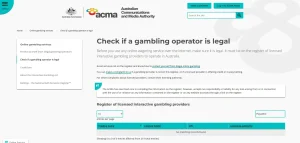
A blacklist, Safety Index or complaint record cannot substitute for a regulator check. Play 2 Win’s licensing evidence is handled separately on the Curaçao licence and ACMA status page. That page distinguishes the stated Curaçao jurisdiction from Australian authorisation and documents the current ACMA register check.
The reverse is also true. A licence statement does not cancel negative complaint history or make an editorial risk score irrelevant. Licensing, contractual terms and reputation are separate evidence layers. The strongest assessment keeps them separate and then asks whether they point in the same or different directions.
Methodology for reading complaint databases
When comparing complaint sites, check the date of the underlying case, not only the date the review page was crawled. A ten-year-old dispute can still be useful for brand history, but it is not evidence that the same operational issue is occurring today. Next, check whether the case was resolved, rejected, closed or left unanswered. Then read the reason category and the platform’s final note rather than relying on the complainant’s headline.
Finally, compare complaint themes with current operator terms. If a historical complaint concerns a rule that no longer exists, its predictive value is lower. If a current review still highlights the same rule or payout concern, the pattern deserves more weight than a raw total.
Sources checked
- AskGamblers Play2Win review and complaint statistics for the current 40-of-47 resolved figure and complaint record.
- Casino Guru Play2win review for the current 1.9/10 “Very low” Safety Index.
- Wizard of Odds Play2Win review for the current blacklist status and its stated rationale.
- Play 2 Win Terms and Conditions as the primary contract source for withdrawal and complaint rules when accessible.
Frequently asked questions
How many Play2Win complaints does AskGamblers show?
AskGamblers currently shows 47 complaints in its Play2Win record, with 40 marked resolved. These are platform-specific historical cases, not a count of all Play 2 Win customers or all disputes.
Is Play 2 Win blacklisted?
Wizard of Odds currently blacklists Play2Win. That is Wizard of Odds’ editorial classification and should be read alongside its stated reasons and the operator’s current Terms.
What is Play 2 Win’s Casino Guru rating?
Casino Guru currently gives Play2win a Safety Index of 1.9/10 and labels it “Very low” under its own review methodology.
Do complaints prove the casino will not pay?
No. Complaint records document submitted disputes and platform outcomes. They are useful risk signals, but they do not prove that every future withdrawal will have the same result.
Bottom line
The reputation picture is materially negative, but it should be stated precisely. AskGamblers currently shows 40 of 47 complaints resolved in its own database. Casino Guru rates Play2win 1.9/10, “Very low”. Wizard of Odds blacklists the casino. These signals are independently useful because they use different methods, and all should remain attributed to their publishers.
For a decision, the most important connection is between repeated withdrawal-related complaint themes and the operator’s cashout rules. Read the Play 2 Win withdrawals guide before treating a deposit as easily reversible, and use the full Play 2 Win Australia review for the wider product and risk context.